The current operating record begins with a focus on professional indoor lighting and structured application support.
ABOUT ZUMTOBEL
Our role is practical: keep photometric intent, product configuration and project documentation aligned while design develops.
The current operating record begins with a focus on professional indoor lighting and structured application support.
Digital photometric exchange becomes central to specification workflows, connecting IES/LDT resources with room calculations.
Control-interface review expands as connected drivers, occupancy sensing and daylight harvesting become package-level decisions.
A 2,400+ person organization supports work across 58 countries, with regional product and compliance scope verified per project.
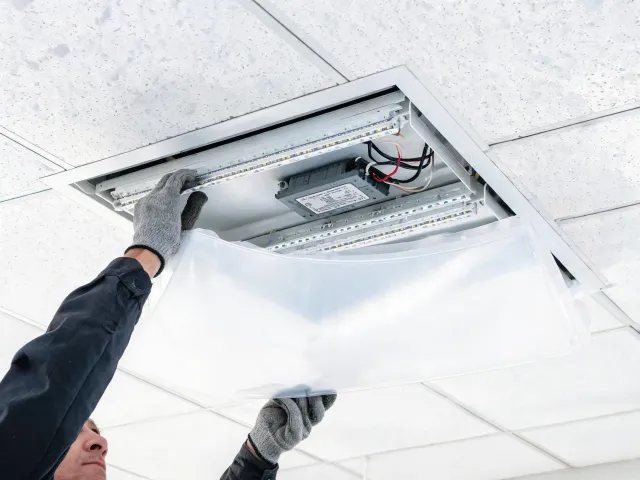
Integrated construction can reduce size and optimize thermal paths, while replaceable drivers or light engines can simplify future maintenance. Neither route is universally preferable. Access method, ceiling disruption, expected operating hours and spares policy should be reviewed before the product family is fixed.
L70 lifetime values depend on thermal conditions and the declared projection method. They are not a promise that every component will operate for the stated number of hours. Controls compatibility also depends on the exact driver option and commissioning plan.
UL for applicable North American product scope · CE and RoHS for applicable European scope. Marks and declarations must be checked on the selected configuration; they are not applied to every family by association.
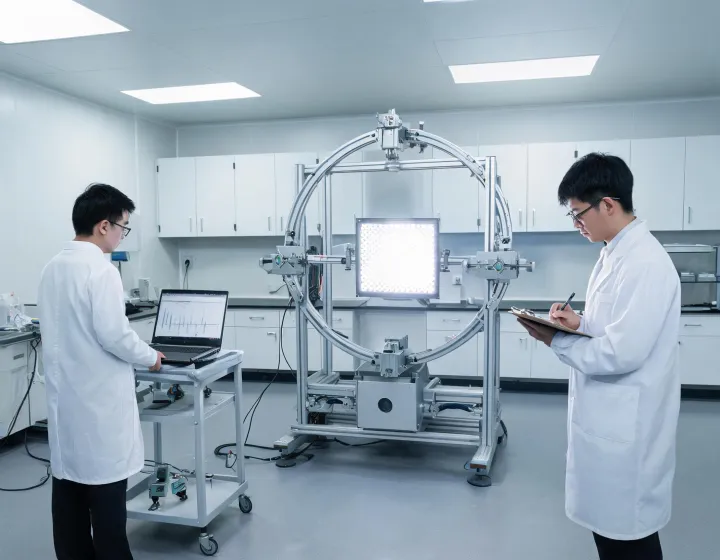
An IES or LDT file should match the luminaire size, output package and optic under review. LM-79 information describes electrical and photometric measurements under stated laboratory conditions; LM-80 and TM-21 contribute to LED lumen-maintenance projections but do not establish the service life of a complete luminaire. Project teams retain the source file and revision used in their calculation.
Our 2026 workflow emphasizes documented questions over broad claims. Application engineers organize inputs, identify missing interfaces and return a decision list. Electrical engineers and controls specialists still verify loads, emergency arrangements, sensors and network responsibilities. Contractors verify actual ceiling conditions and access. This division keeps support useful without blurring professional accountability.
Request the photometric, electrical and compliance documents relevant to the selected optic and driver.
Contact the Project Desk