Project desk: +43 5572 390-0 · [email protected]Photometric files · English

APPLICATIONS

Match the light to the visual task

Use mounting conditions, occupant activity, surface reflectance and control intent to narrow the product family before comparing wattage.

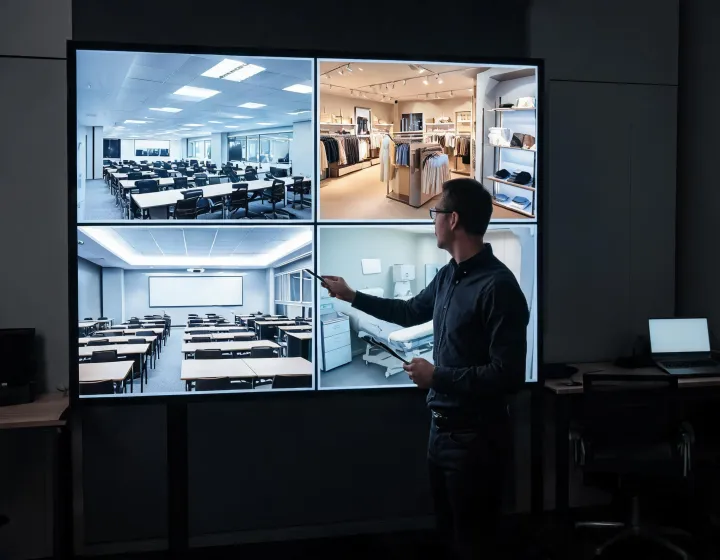
Lighting designer comparing commercial applications

Application briefs

Office lighting application

Office and workplace

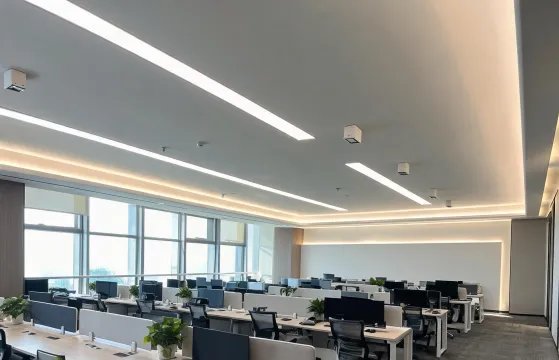
Start with the task plane and screen locations. A high lm/W figure can reduce connected load, but visual comfort also depends on luminance distribution, optic shielding and UGR evaluation. Daylight harvesting requires sensor placement that sees useful daylight without being confused by the luminaire itself.

  • Review: task illuminance, UGR, CCT, CRI
  • Coordinate: ceiling system, DALI-2 zones, emergency scope
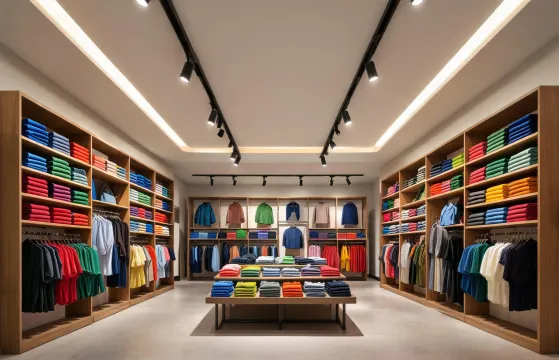
Retail lighting application

Retail and hospitality

Accent and ambient layers should be judged together. Narrow beam angles add contrast but increase aiming sensitivity; broader distributions simplify coverage but may flatten the scene. CRI and TM-30 data help evaluate color, while sample review reveals material response that a single metric cannot describe.

  • Review: beam angle, candela distribution, TM-30
  • Coordinate: aiming access, scene controls, finish consistency
Education lighting application

Education

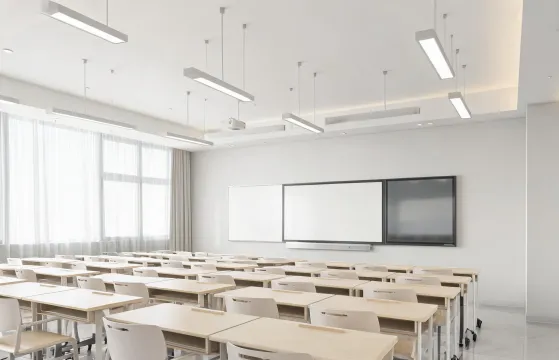
Classrooms shift between discussion, writing, display use and cleaning. Separate control zones can support these modes, but distributed controls add devices and commissioning steps. A centralized architecture is easier to oversee at campus level, while local intelligence can isolate faults and support flexible room changes.

  • Review: vertical illumination, screen reflections, occupancy sensing
  • Coordinate: scenes, after-hours use, facilities access
Healthcare lighting application

Healthcare and public interiors

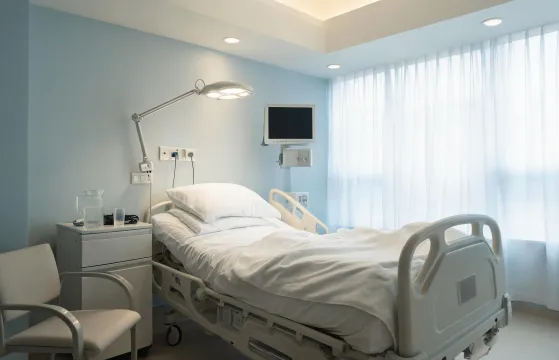
Clinical tasks, patient comfort and cleaning protocols impose different requirements on one room. Product suitability depends on the declared ingress protection, materials and maintenance method. Color quality supports observation, but it must be assessed with distribution, adaptation and the surrounding finishes.

  • Review: CRI, CCT, glare, accessible maintenance
  • Coordinate: clinical workflow, controls, regional requirements

Selection checklist

Trade-offs to record

Maximizing luminous efficacy can reduce power, yet an optic optimized only for lm/W may not provide the required glare control or facial illumination. Likewise, integrated components can support compact thermal design, while serviceable assemblies may lower disruption later. The correct decision follows the room, operating profile and maintenance policy.

Turn an application brief into a review list

Share the plan, task criteria and control narrative; we will return the open product decisions.

Submitting this form means you accept our Privacy Policy.